Don't Wait Until a Full Replacement Is Necessary
Interlocking paver surfaces are among the most durable hardscape options available to Los Angeles homeowners — but they're not maintenance-free. Clay soil expansion, tree root intrusion, washing out of joint sand, and years of vehicle traffic can gradually degrade even a well-installed paver surface. The good news is that pavers are inherently repairable, and catching problems early almost always saves significant money compared to waiting until a full replacement becomes necessary.
At Superior Los Angeles Paving and Driveways, our repair crews inspect and restore paver driveways, patios, and walkways throughout Los Angeles every week. Here are the five most common warning signs we encounter — and what each one means for your surface.
Warning Sign #1: Sunken or Uneven Pavers
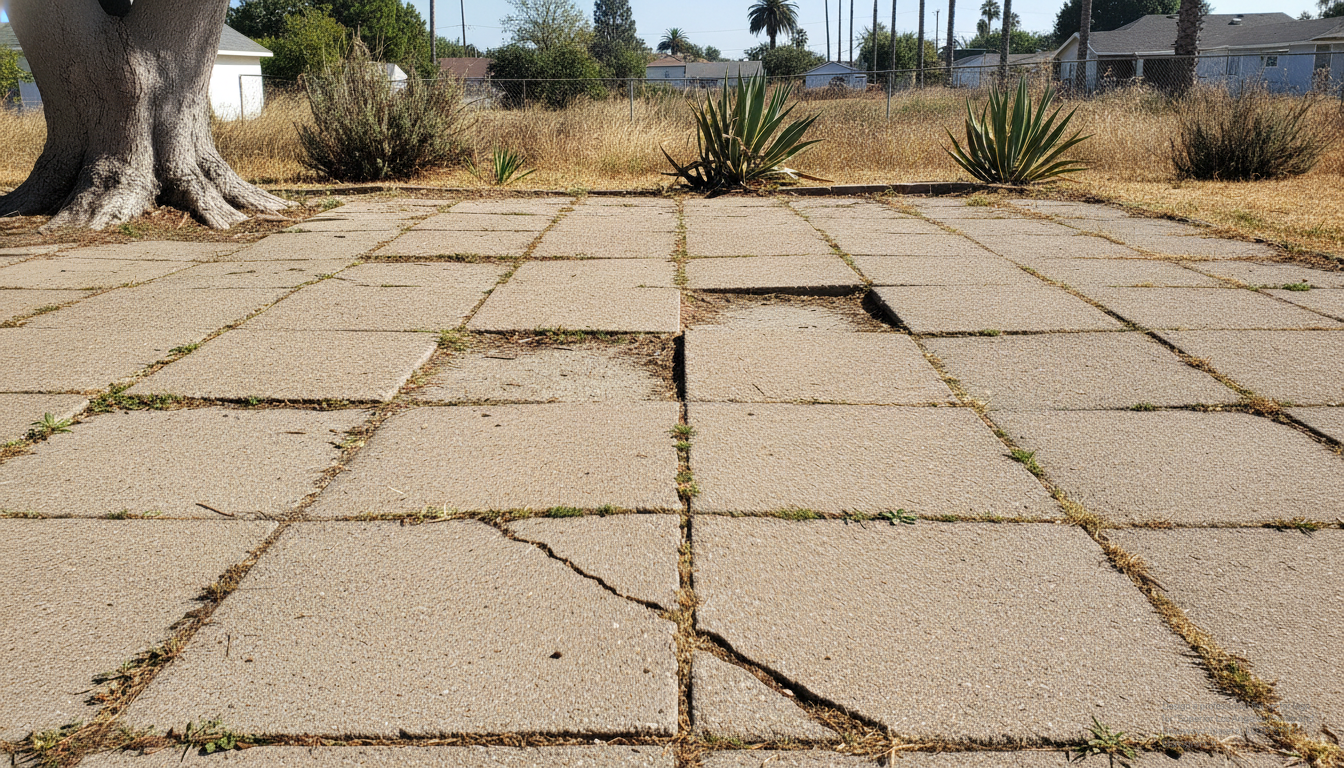
If you notice certain sections of your driveway or patio have dropped below the surrounding surface, or if individual pavers rock underfoot, the sub-base beneath those units has likely settled, eroded, or washed out. In Los Angeles, this frequently happens after heavy rainfall events that channel water beneath the paver surface and displace the bedding sand layer.
Left unaddressed, uneven pavers become trip hazards and allow water to pool in low spots, accelerating further sub-base erosion. Our paver repair and restoration service addresses this by lifting the affected pavers, re-grading and re-compacting the sub-base, and re-setting the units to a level, stable surface.
Warning Sign #2: Widening or Empty Joints Between Pavers
The polymeric sand that fills the joints between your pavers does critical structural work: it locks the units together, prevents lateral movement, and deters weed germination and ant colonization. Over time — especially after heavy rains or power washing — this joint sand can wash out or degrade, leaving visible gaps between paver units.
Wide, empty joints are a sign that your surface needs re-sanding. If ignored, pavers will begin to shift laterally, the interlocking structure weakens, and you'll start to see surface undulation across larger areas. This is one of the most affordable repairs we perform, and it dramatically extends the life of your existing surface.
Warning Sign #3: Cracked or Chipped Paver Units
While interlocking pavers resist cracking far better than a solid concrete slab, individual units can crack under concentrated point loads — such as a vehicle parking repeatedly in the same spot with a rock or debris trapped underneath — or from freeze-thaw cycles in higher-elevation LA areas like the hills above Glendale.
The outstanding advantage of a paver surface is that cracked units can be pulled and replaced individually without disturbing the rest of the driveway or paver driveway in Glendale. We carry a wide inventory of common paver styles and colors to match existing surfaces as closely as possible.
Warning Sign #4: Persistent Weed Growth Through Joints
If you're seeing weeds pushing up through the joints of your patio or walkway pavers, it means the polymeric sand has degraded enough to allow seed germination and root penetration. In Los Angeles's warm climate, weeds grow year-round, and root systems can gradually displace joint sand and destabilize the surrounding pavers.
This problem is most common on older paver surfaces where the original joint sand was low-quality or has simply reached the end of its useful life. Removing the vegetation, treating the joints, and re-applying professional-grade polymeric sand is far less disruptive than dealing with a patio full of shifted, weed-heaved pavers down the road. Homeowners in Pasadena and Alhambra — where mature street trees are common — are especially susceptible to this issue.
Warning Sign #5: Fading, Staining, or Dull Surface Color
Los Angeles's intense sun exposure bleaches paver surfaces over time, and automotive oil drips, leaf tannins, and organic debris from surrounding trees can leave lasting stains on unsealed or under-sealed pavers. If your once-vibrant driveway or patio now looks tired, washed-out, or blotchy, a professional cleaning and paver sealer application can restore the original color and give the surface a like-new appearance.
Professional-grade sealers also provide a protective barrier that makes future staining much easier to clean up. In Southern California's climate, we recommend resealing most paver surfaces every two to four years, with high-traffic driveways on the more frequent end of that range. This is especially valuable for pool deck pavers in Beverly Hills and other luxury properties where surface appearance is paramount.
When Repair Makes Sense vs. Full Replacement
As a general rule, if the majority of your paver units are still structurally intact and the problems are localized to specific zones, professional repair is the smarter financial decision. If more than 40 to 50 percent of the surface shows significant structural failure or if the underlying base has completely deteriorated across the entire area, a full replacement with our driveway paver installation or patio paver installation service may be the more cost-effective long-term solution.
We always provide an honest assessment during our free inspection — we'll tell you exactly what the surface needs and give you options at different price points.
Serving All of Los Angeles with Paver Repair and Restoration
Our paver repair crews serve homeowners across the greater Los Angeles area, including Culver City, West Hollywood, Beverly Hills, Glendale, Pasadena, and Alhambra. We work efficiently to minimize disruption to your daily routine and leave your property clean at the end of every work day.
If you've noticed any of the warning signs described above, don't wait. Call +1 (424) 351-1130 or email [email protected] to schedule your free paver inspection and repair estimate today. Our team is available Monday through Sunday, 8:00 AM to 6:00 PM.